Germany's working-student and internship market stayed broad in August 2026, even as the number of newly observed listings eased from July. Workingstudentjobs.de identified 10,765 new listings from 3,910 employers during the month. That was a 7.0% decline in new listings and a 5.9% decline in hiring companies compared with July.
Operations, sales, tech and marketing produced the largest volumes of new opportunities. Munich moved ahead of Berlin among cities, hybrid work remained meaningful but fully remote roles were scarce, and German appeared as a requirement in most listings.
This monthly working student job market report for Germany summarizes what students should know before planning their September applications.
August 2026 at a glance
10,765 newly observed working-student and internship listings
3,910 employers with at least one new listing
7.0% fewer new listings than in July
15.7% of new listings disclosed salary information
32.5% hybrid, 2.0% remote and 65.5% on-site
Munich led the city ranking with 1,298 new listings, followed by Berlin with 1,125
Operations was the largest field, followed by sales, tech and marketing
The monthly comparison describes listings observed by workingstudentjobs.de. It should not be read as a complete census of every student role in Germany or as proof of a wider economic trend.
Hiring activity slowed slightly after July
Workingstudentjobs.de observed 10,765 new listings in August, down from 11,571 in July. The number of employers represented also moved from 4,155 to 3,910. In absolute terms, that means 806 fewer listings and 245 fewer employers month over month.
For current vacancies, browse all working student and internship jobs in Germany.
Operations, sales and tech generated the most listings
Operations was August's largest field with 2,089 new listings, representing 19.4% of the monthly total. Sales followed with 1,706 listings, while tech contributed 1,471 and marketing 1,416. Engineering rounded out the top five with 1,084.
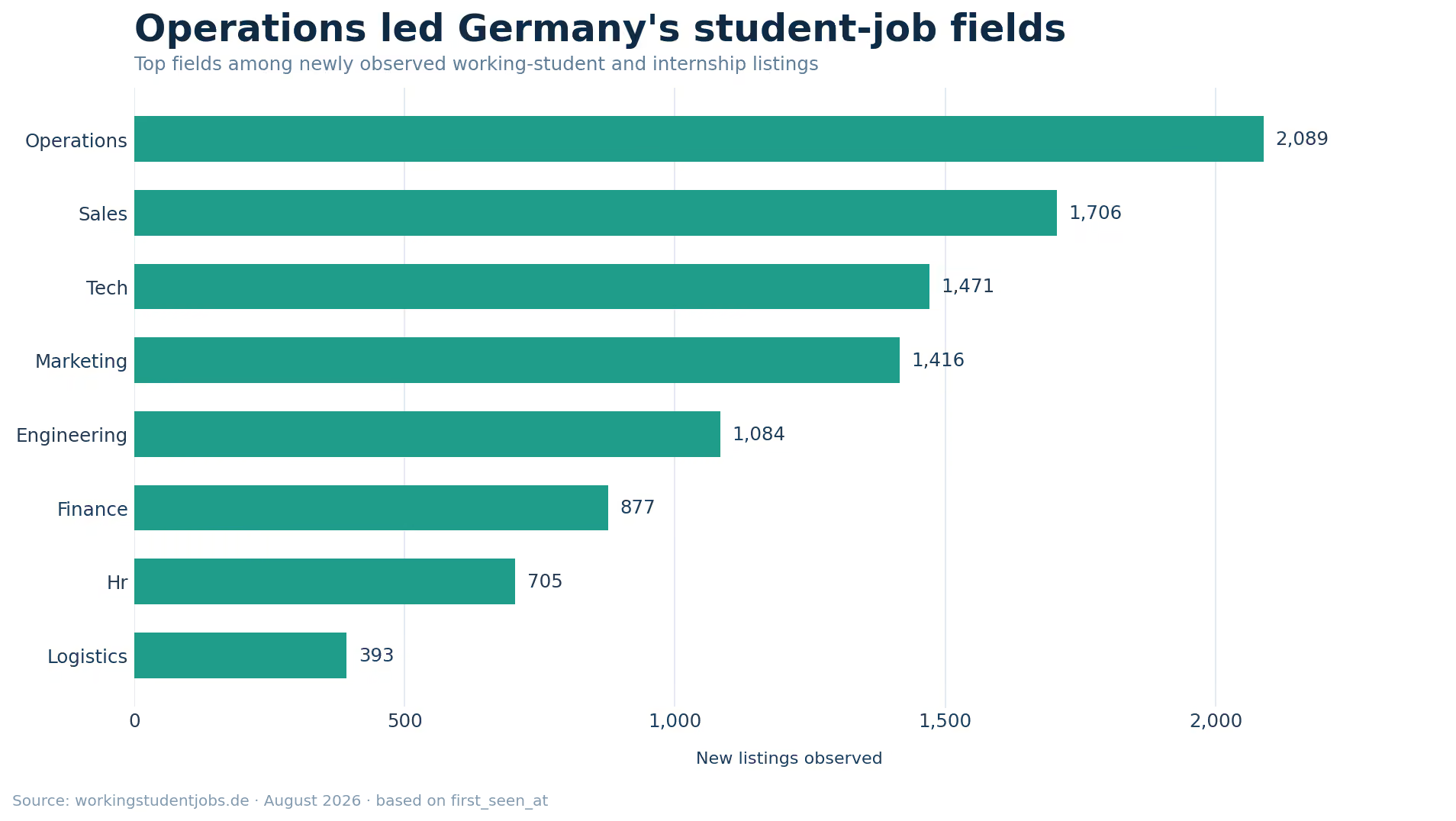
The ranking suggests that students do not need to limit their search to software or engineering. Search terms such as business operations, customer success, account management, content, performance marketing, controlling and people operations may reveal relevant roles that do not use a student's degree title. Tech and engineering together still accounted for 2,555 listings.
Munich led the city ranking, ahead of Berlin
Munich recorded 1,298 newly observed listings in August, the most of any city in the dataset. Berlin followed with 1,125, then Hamburg with 759 and Frankfurt with 625. Cologne, Düsseldorf and Stuttgart completed the top seven.
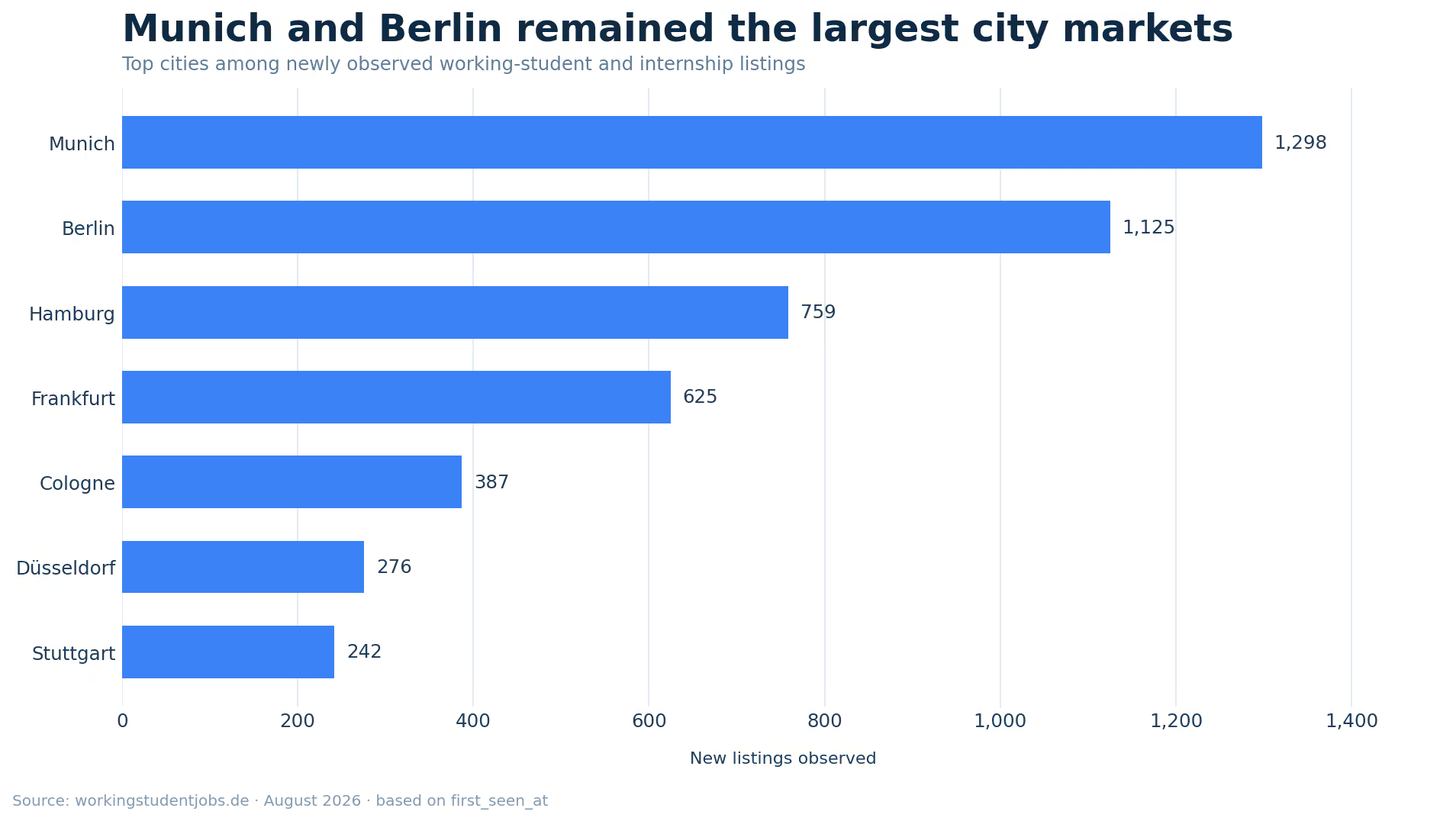
Together, Munich and Berlin accounted for 2,423 new opportunities, or 22.5% of all August listings. Their scale makes both cities strong starting points, but the remaining market was widely distributed. Hamburg and Frankfurt were especially relevant, while university cities outside the top four can offer a smaller candidate pool and a different mix of employers.
Students can compare live openings in Munich and Berlin before deciding whether relocation or a longer commute is worthwhile.
Hybrid work was common; fully remote work was not
Work location remains one of the clearest constraints in the German student-job market. Of the August listings, 7,051 were classified as on-site, 3,497 as hybrid and only 217 as fully remote. That translates to 65.5% on-site, 32.5% hybrid and 2.0% remote.
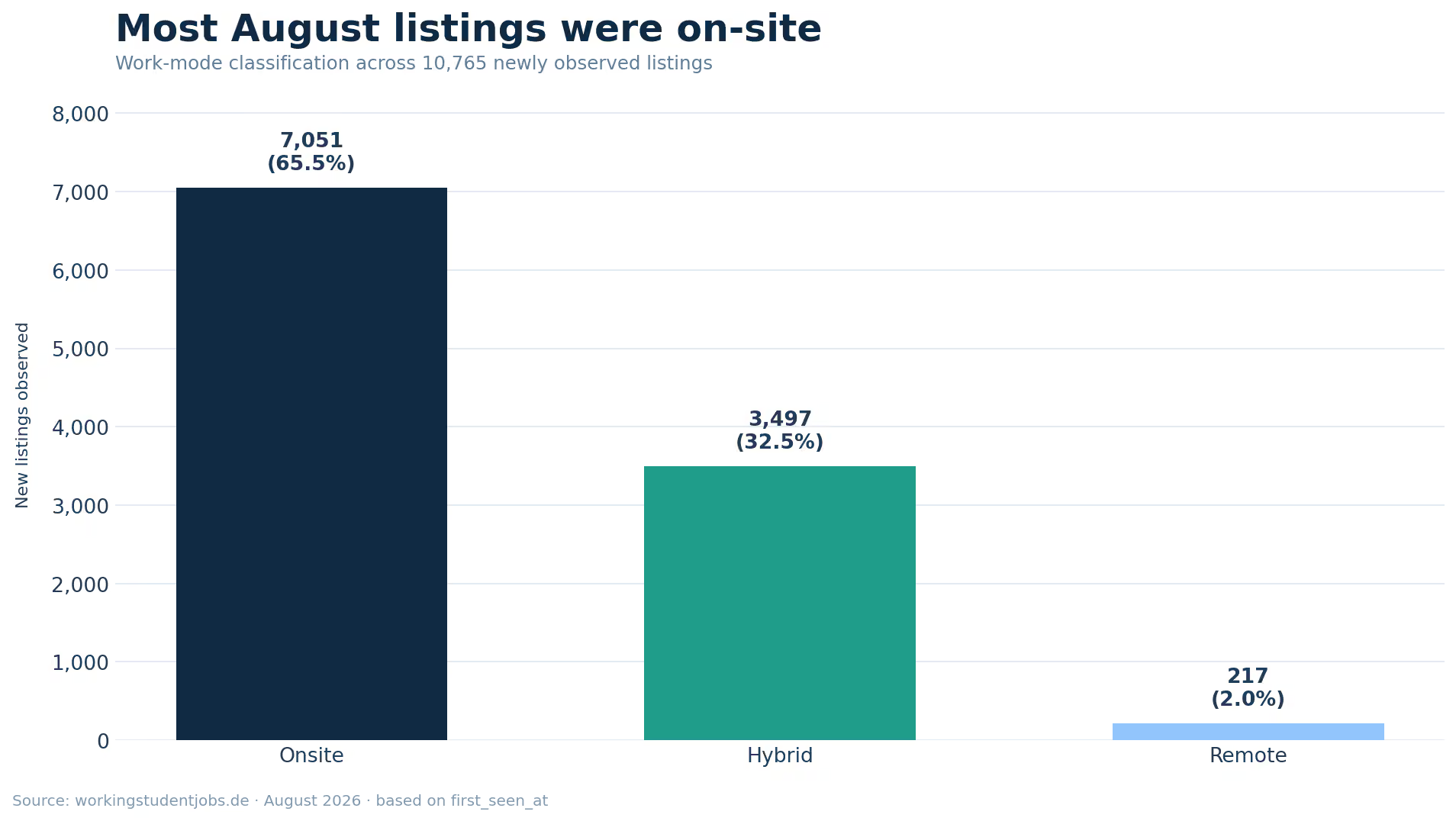
For students, the practical lesson is simple: a remote-only search excludes most of the available market. A hybrid search offers much more choice, especially for students who can commute one or two days each week. If location is flexible, combining nearby cities with hybrid filters can produce better results than searching nationally for remote roles alone.
German remained important, but English appeared often
German was marked as required in 9,647 August listings, or 89.6% of the monthly total. English was marked as required in 5,654 listings, or 52.5%. These categories are not mutually exclusive: many employers expect both languages, particularly in international teams that work in English but communicate with German customers, colleagues or regulators.
This distinction matters for international students. An English requirement does not automatically mean that German is unnecessary. Candidates should read each language label and job description carefully. Students who are still learning German can start with the site's English-language job filter, then confirm whether a role is English-only or bilingual before applying.
The employers with the most new listings
Large employers played a visible role in August. The companies with the highest numbers of newly observed listings were:
Lidl in Germany — 701
Kaufland — 245
Deutsche Bahn — 186
PwC Deutschland — 155
ALDI Nord Group — 154
BMW Group — 139
Siemens — 111
Deloitte — 97
SAP — 86
KPMG Deutschland — 85
This list reflects the volume of listings observed during August, not confirmed hires. High-volume employers can be useful for students who want several locations or functions to choose from. Smaller employers remain important, however: the 3,910-company total shows that opportunities extended well beyond the ten organizations above.
What students should do with the August data
First, widen the role vocabulary in your search. Operations led the market, and sales and marketing were also large. Students in business, social science and technical degree programmes may qualify for several adjacent fields.
Second, use location and work-mode filters together. Munich and Berlin offered the largest city markets, but remote-only roles represented just 2.0% of new listings. Hybrid positions provide a more realistic route to flexibility.
Third, check language requirements rather than relying on an English job title. Many roles use English internally while still requiring German for part of the work.
Finally, apply while a role is fresh. Employers can close student vacancies quickly once they receive enough qualified candidates. Set a focused job alert and tailor your CV to the skills named in each description. If you are new to the German market, read our guide to working student jobs in Germany before applying.
Only 15.7% of August listings disclosed pay. When salary information is available, compare it with the site's working student salary guide rather than judging a figure in isolation.
Methodology
This report covers jobs whose first_seen_at timestamp fell between 1 August and 31 August 2026. In plain language, these are listings first discovered by workingstudentjobs.de during the calendar month. We use first_seen_at because the original publication date was unavailable for most source listings.
Counts are based on working-student and internship listings in the workingstudentjobs.de database. A listing can carry more than one job-type or language flag, so those particular categories may overlap. Field, city and work-mode classifications are presented as assigned in the dataset.
The report measures listings observed on the platform, not every job posted in Germany. Employer counts represent companies associated with at least one newly observed listing. Company rankings show listing volume rather than completed hires. Salary coverage measures whether pay information was disclosed, not whether a role paid above or below market rates.
For a longer-term view, see the 2026 working student jobs report.
Frequently asked questions
How many working-student and internship listings were added in August 2026?
Workingstudentjobs.de observed 10,765 new working-student and internship listings during August 2026. They came from 3,910 employers.
Which German city had the most new student-job listings?
Munich led the August dataset with 1,298 newly observed listings. Berlin ranked second with 1,125, followed by Hamburg and Frankfurt.
Which fields offered the most opportunities?
Operations ranked first with 2,089 new listings. Sales, tech, marketing and engineering completed the top five fields.
How common were remote working-student jobs?
Fully remote roles accounted for 217 listings, or 2.0% of August's total. Hybrid roles were much more common at 3,497 listings, or 32.5%.
Do international students need German for working-student jobs?
It depends on the role, but German was marked as required in 89.6% of the August listings. English appeared as a requirement in 52.5%; because the flags overlap, many roles required both languages.
Ready to search? Explore the latest working student and internship jobs in Germany and set filters for your field, city, language and preferred work mode.
* Einige Links auf dieser Seite sind Werbe- oder Affiliate-Links. Wenn du darüber etwas kaufst oder ein Angebot abschließt, erhalten wir möglicherweise eine Provision. Für dich entstehen keine zusätzlichen Kosten. Damit unterstützt du unsere Arbeit an workingstudentjobs.de, und unsere Bewertungen und Empfehlungen bleiben unabhängig.
Häufig gestellte Fragen
Über den Autor

Dinh Minh (Minton) Vu
Dinh Minh Vu is a software engineer and CS master's student at the University of Passau. As an international student who navigated the German working student system himself, he built workingstudentjobs.de to help other international students find and land Working Student roles in Germany.
Finde deinen nächsten Werkstudentenjob
Durchsuche 1000+ Stellen bei Top-Unternehmen in Deutschland.
Jobs durchsuchen